france beyond paris
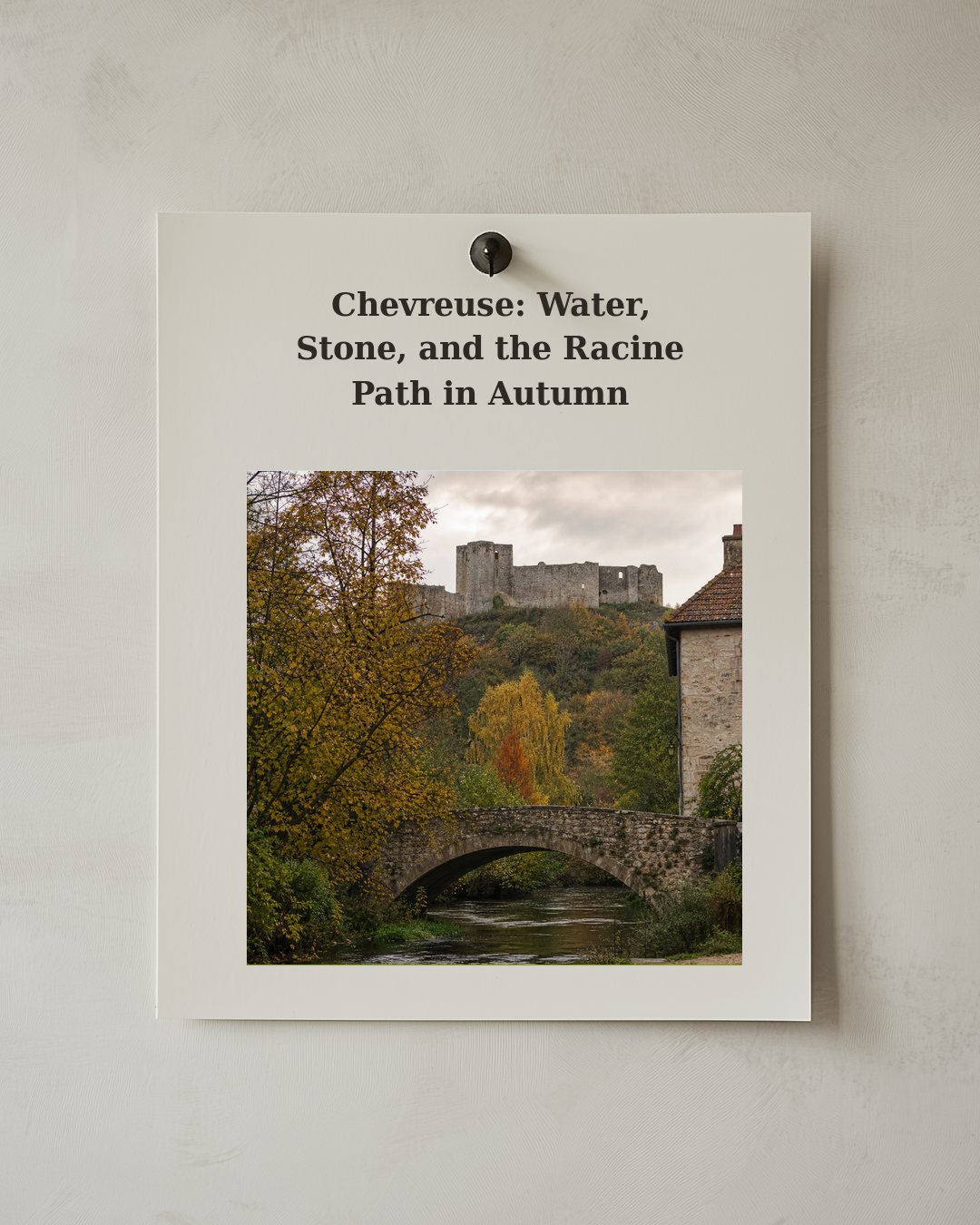
Chevreuse: Water, Stone, and the Racine Path in Autumn
Plan a gentle autumn day in Chevreuse: riverside bridges, medieval lanes, a climb to Château de la Madeleine, and Racine’s path—plus clear steps and tips.
A thin mist hangs over the Yvette and the first poplars flare gold. You step off the train, tuck your scarf closer, and follow the sound of water towards a valley town stitched with bridges, leather‑working traces, and a medieval fortress watching from its hill.
Before you go
Use official sources on the morning of travel and again before your return. Conditions change with weather and works.
- Check the RATP/Île‑de‑France Mobilités journey planner for routes to and from Saint‑Rémy‑lès‑Chevreuse, disruptions, and fares.
- Confirm Château de la Madeleine access hours and conditions with the Ville de Chevreuse and the Parc naturel régional.
- Note that some paths and viewpoints may be weather‑sensitive; adjust your walking plan to daylight and mobility needs.
Official sources named below in “Sources for this article.”
Arrival: from the station to the valley floor
Step out at Saint‑Rémy‑lès‑Chevreuse and let the valley orient you: the river pulls you downhill, the hilltop fortress draws your eye. Keep your first hour unhurried—this is a day of thresholds rather than checkpoints.
Walk towards Chevreuse on local paths and lanes, allowing for weather, daylight and your own pace. If the ground is wet, choose pavements and road shoulders; the reward is the same: the first scent of damp leaves and stone.
Practical notes
- Leave a comfortable margin for your evening train back.
- If you prefer to save your climb for later, aim straight for the riverfront in town.
Water and work: the Yvette and its little bridges
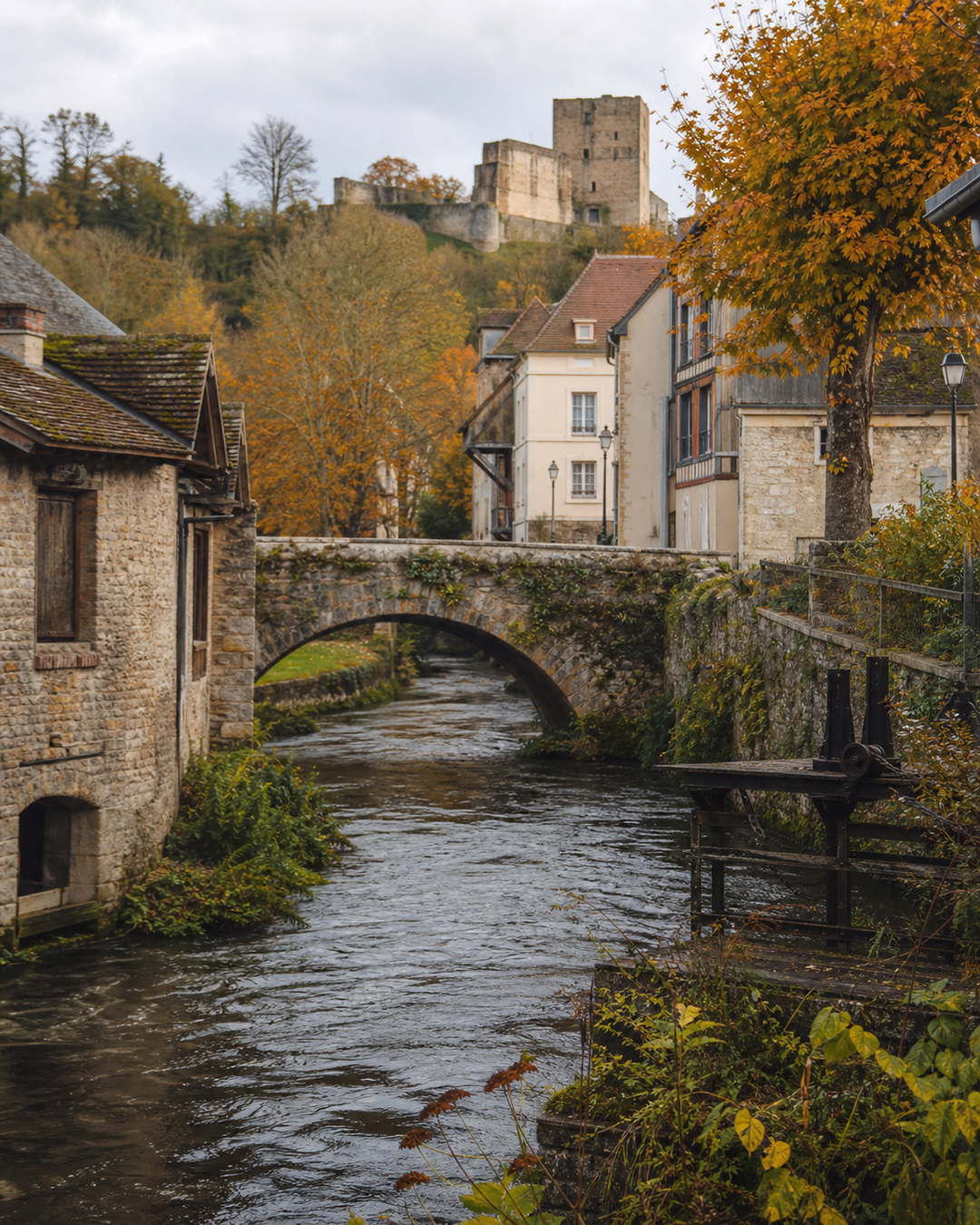
Chevreuse grew long along the Yvette, a development that still reads in water, stone and wood. Follow the town‑side river path and seek out the Promenade des Petits Ponts—a thread of small bridges and waterside façades that hints at the tanneries and bark mills that once lined the banks. Fragments of that working life remain partially visible today.
Pause where the water slows under a low arch. Listen. The town’s story is practical first, romantic by consequence.
What to notice:
- The varied stone courses and timber repairs on riverside buildings.
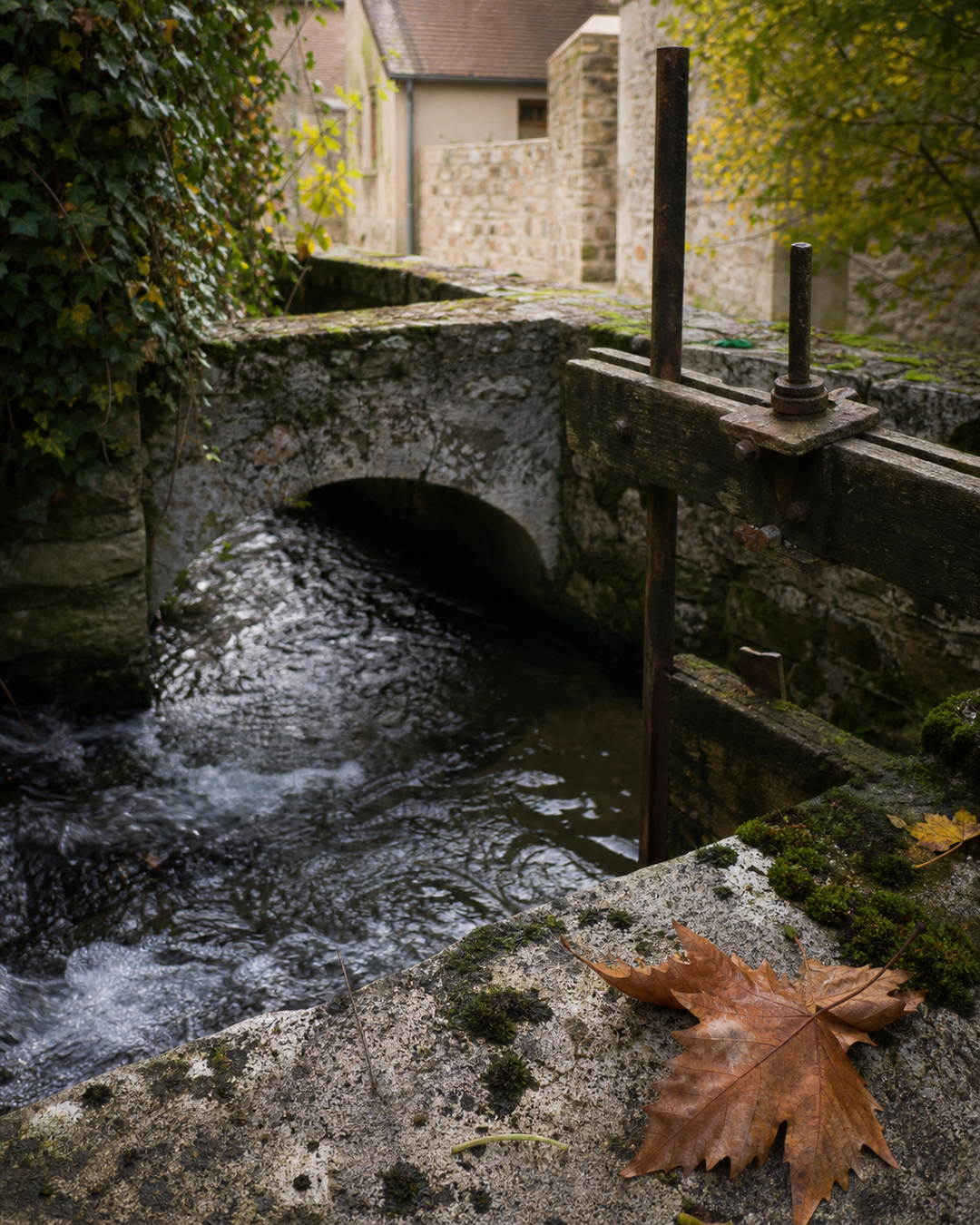
- Iron rings and sluice hardware near older channels.
- The changing sound of the Yvette at each crossing.
Heart of the medieval town: church and priory
Chevreuse first coiled itself, almost like a snail, around Église Saint‑Martin and the Prieuré Saint‑Saturnin. Keep them as your quiet bearings while you wander the lanes. They are the historical center of gravity, anchoring a thousand years of settlement.
If you sketch as you travel, take a quick line drawing of a doorway moulding or a roof angle—small measurements that make a place stick.
The climb: Château de la Madeleine
From town, the path turns upward to Château de la Madeleine, on the Hautvilliers heights. The ascent is short but purposeful; each switchback opens the valley until, at the top, the view pours out over the Haute Vallée de Chevreuse and the Yvette like a long, cool ribbon.
This is one of Île‑de‑France’s rare preserved medieval fortresses. The strong rectangular keep is notably well conserved; the walls tell of sieges, especially in the Hundred Years’ War. Today the site belongs to the Yvelines Department and also houses the Maison du Parc within its enceinte, a contemporary, working neighbor to very old stones.
Visiting essentials (verify on the day)
- Open Tuesday to Sunday year‑round. Hours shift seasonally: generally 11:00–20:00 from April through September, and 11:00–18:00 from October through March.
- Free, self‑guided access. At last check, visitors could enter the courtyard, walk the ramparts for the panoramic view, climb the guards’ tower, and see a cellar exhibition on the château’s history.
Bring a light scarf or layer—the hill wind is honest, even in soft autumn.
Racine above the valley: beginning the Chemin Jean Racine
In the 17th century, Jean Racine—yes, the dramatist—supervised alterations to the keep around 1661. The historic path linking Port‑Royal‑des‑Champs and Chevreuse, passing by the château, now bears his name: Chemin Jean Racine.
Begin a short section from the fortress edge and walk only as far as daylight and current guidance allow. The route folds views of fields and roofs into a quiet literary footnote: a writer’s line crossing a living town.
Tip: As you descend, notice the official street to the castle—the chemin de la butte des vignes. Its south‑facing slope once carried vines; on a mild day you can still feel the sun linger there.
Loops back through leather and light
On your return, drift once more along the river to find the séchoir à peaux (leather‑drying house) and other heritage markers. Chevreuse practiced drapery, then tanning, for centuries; the trades helped stretch the town along the river’s practical edge.
If you have a few minutes left, stand on one last little bridge and watch the Yvette draw light downstream. That’s the souvenir you can carry past the turnstiles.
A simple route you can follow
1) Morning: Use the official journey planner from your Paris start to reach Saint‑Rémy‑lès‑Chevreuse; note return options before you set out.
2) Station to town: Choose the safest, clearest path into Chevreuse based on weather and light. Pavements and lanes are fine—this day rewards attention more than speed.
3) Riverside first: Walk the Yvette‑side route through the Promenade des Petits Ponts and look for traces of tanneries and mills.
4) Up to the fortress: Climb to Château de la Madeleine for the view and free self‑guided visit (courtyard, ramparts/view, guards’ tower, cellar exhibition—confirm on the day).
5) Racine’s way: Continue a short, safe stretch along the Chemin Jean Racine and turn back when light or wayfinding says so.
6) Return with margin: Drift through town, then leave generous time for your train back to Paris.
At home: the water‑and‑stone errand
Re‑map one ordinary errand as a “water‑and‑stone” walk. Identify:
- One crossing (a gutter, a curb, a tiny bridge).
- One old material (brick, granite step, worn timber).
- One small detour worth taking slowly.
Finish with a warm bowl of soup or tea and a short page of notes on where practical movement becomes memory.
Journal prompts
- Which overlooked route near you would improve if you walked it as a sequence of thresholds rather than a shortcut?
- When has a climb or detour changed your understanding of a place?
Sources for this article
- Ville de Chevreuse — Château de la Madeleine: https://www.chevreuse.fr/fr/decouvrir-chevreuse/patrimoine/393-chateau-de-la-madeleine
- Ville de Chevreuse — Histoire: https://www.chevreuse.fr/fr/decouvrir-chevreuse/presentation-de-chevreuse/549-histoire
- Parc naturel régional de la Haute Vallée de Chevreuse — Château de la Madeleine: https://www.parc-naturel-chevreuse.fr/chateau-de-la-madeleine
- RATP journey planner — Saint‑Rémy‑lès‑Chevreuse: https://www.ratp.fr/en/itineraires/%26Saint%20remy%20les%20chevreuse