france beyond paris
Bourron-Marlotte: An Autumn Walk in the Footsteps of the Painters
Plan a quiet autumn day in Bourron‑Marlotte near Fontainebleau: follow the Artists Trail, visit Saint‑Sévère and the Mairie‑Musée, with clear travel tips.
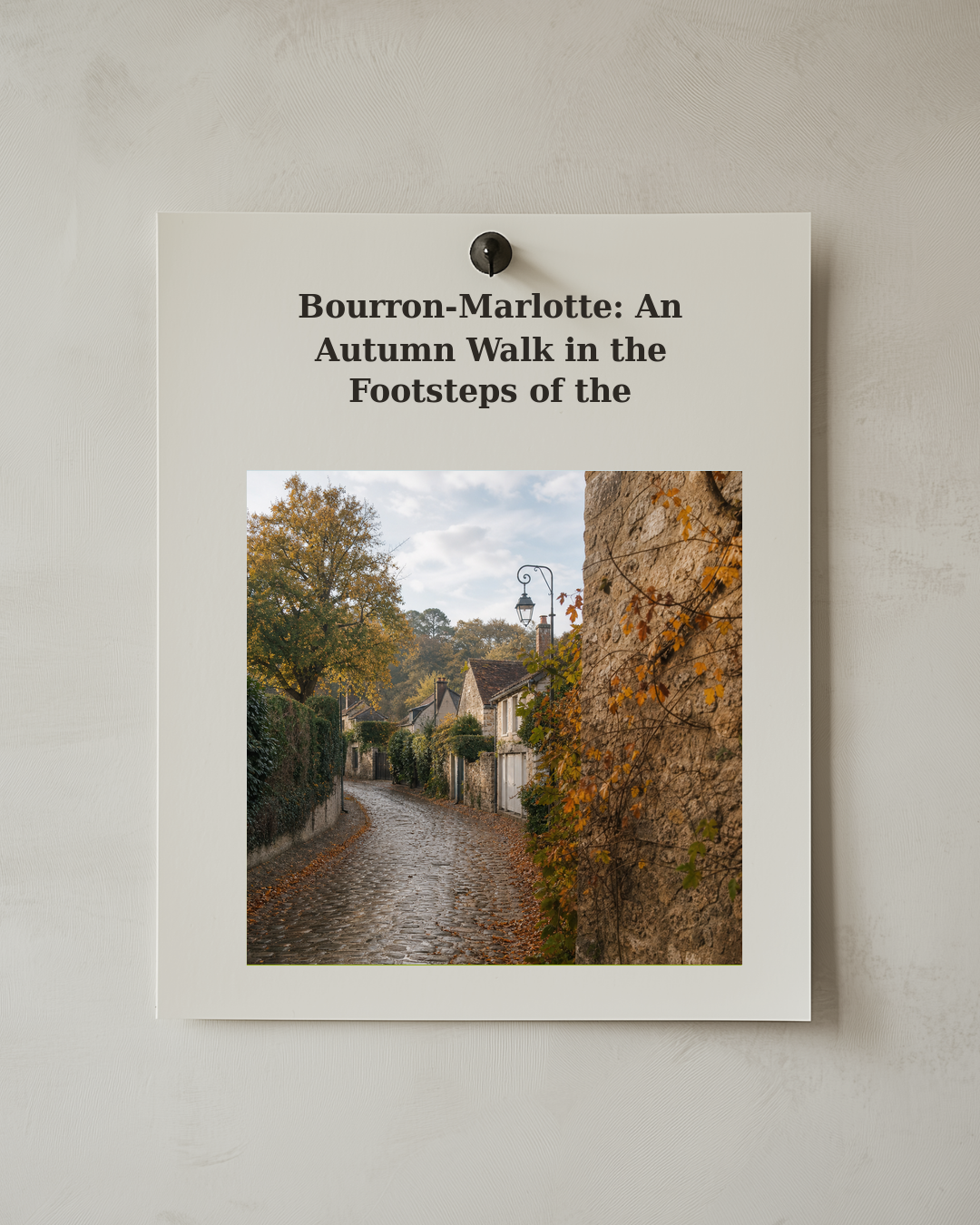
A thin wind combs the forest edge and the cobbles keep a little shine from last night’s rain. In Bourron-Marlotte, between Fontainebleau and Nemours, the streets feel made for an unhurried, painterly pace—more sketchbook margin than grand canvas.
Where the painters wandered
In the nineteenth century, the merged villages of Bourron and Marlotte became a quiet magnet for landscape painters. Around 1830, Caruelle d’Aligny and Jean‑Baptiste Corot settled in Marlotte; later, from 1860, Sisley, Renoir, Monet, Cézanne, Pissarro and Bazille joined the village’s orbit. A bohemian spirit reigned as artists met at the Auberge Saccault and the inn run by “Mother Antony.” Other painters followed, some eventually settling here. A number are buried in the Bourron cemetery. These are confirmed local associations; not every name corresponds to a present‑day visitor stop. [Source: official Artists Trail.]
Within the village, two anchors ground the story: the Romanesque church of Saint‑Sévère—considered one of the oldest in Gâtinais and notable for its painted litre funéraire—and the modest Mairie‑Musée (Town Hall Museum), founded in 1906 on the initiative of Charles Moreau Vauthier and home to works by Auguste Allongé, Eugène Cicéri, Charles Delort, Armand Point and Arthur Heseltine. Filmmaker Jean Renoir shot his first film here in 1924.
Before you go
Please check these directly before travelling—autumn light is lovely, but plans work best when current:
- Transport: use the official Île‑de‑France Mobilités or RATP journey planner from your exact Paris starting point to Bourron‑Marlotte–Grez, and confirm live departures for your return. Do not rely on historic fares or durations.
- Village resources: download or pick up the official Artists Trail material from Fontainebleau Tourisme to follow the signed route and audio guides as available.
- Access and hours: verify current conditions and any booking requirements for Saint‑Sévère and the Mairie‑Musée with local sources; treat the historic inns as heritage markers rather than assuming service or entry.
- Château de Bourron: confirm on the château’s official site whether any visit is public on your date before adding it to the day.
- Weather and paths: check forecast and daylight; parts of the trail and village lanes can feel different in wet leaf and low sun.
Official sources named at the end of this article.
Getting there, simply
- From Paris, plan your route in real time to Bourron‑Marlotte–Grez using the Île‑de‑France Mobilités or RATP planner.
- On arrival, give yourself a few minutes to settle—this is a small place with a forest hush.
- Open the Artists Trail on your phone (or carry a printed version) before you start walking.
Tip: autumn trains home can be busy at day’s end. Set a gentle alarm to check live departures in good time.
A half‑day on foot: the artist’s village
Follow this calm loop, adjusting to daylight and what’s open on your date.
1) Begin with the Artists Trail
Before stepping into side streets, download or collect the official Artists Trail material. It links documentary notes, walking tours and, where available, audio guides across the Pays de Fontainebleau. In Bourron‑Marlotte it helps you read façades and corners that might otherwise pass as simply pretty.
2) Streets of painters and forest edges
Use the trail to wander the painter‑associated lanes. Look for modest village houses, hedges scrolled by ivy, and those small thresholds where artists once came and went between easel and supper. Keep to publicly accessible streets and viewpoints only.
3) Église Saint‑Sévère
Pause at the church, probably among the oldest in Gâtinais. Step inside if open to see the nave’s rare litre funéraire—a painted band once bearing local arms—quiet evidence of older lives within these walls.
4) La Mairie‑Musée (Town Hall Museum)
A small civic trove since 1906, created on the initiative of Charles Moreau Vauthier. When open, it gathers works by artists who lived here—Auguste Allongé, Eugène Cicéri, Charles Delort, Armand Point and Arthur Heseltine among them—so the village story has faces and trees again.
5) Heritage inns of a bohemian pause
Note the sites of the Auberge Saccault and the inn run by “Mother Antony.” Treat them as markers of the nineteenth‑century scene where artists met; do not assume present‑day service or access.
6) Optional: towards Château de Bourron
If public visiting is confirmed for your date, you may add a measured detour. Otherwise, keep the château as a graceful name in your notes and continue the village loop.
7) Unhurried return
Leave time to meander back towards the station before the final evening train you’ve chosen. The last light along garden walls can be the day’s best sketch.
Small history, clearly marked
- Around 1830: Caruelle d’Aligny and Corot settle in Marlotte; friends from Barbizon visit, including Harpignies, Daubigny, Diaz de la Peña, Olivier de Penne and Célestin Nanteuil.
- From 1860: Sisley, Renoir, Monet, Cézanne, Pissarro and Bazille come into the village’s orbit; a bohemian spirit is noted at the two inns.
- After 1870: lesser‑known but once‑celebrated painters buy or build houses here; some rest in the Bourron cemetery.
- Civic anchors today: Saint‑Sévère and the Mairie‑Musée hold the thread for visitors.
These points come from the official Artists Trail and Fontainebleau Tourisme.
What to notice in autumn light
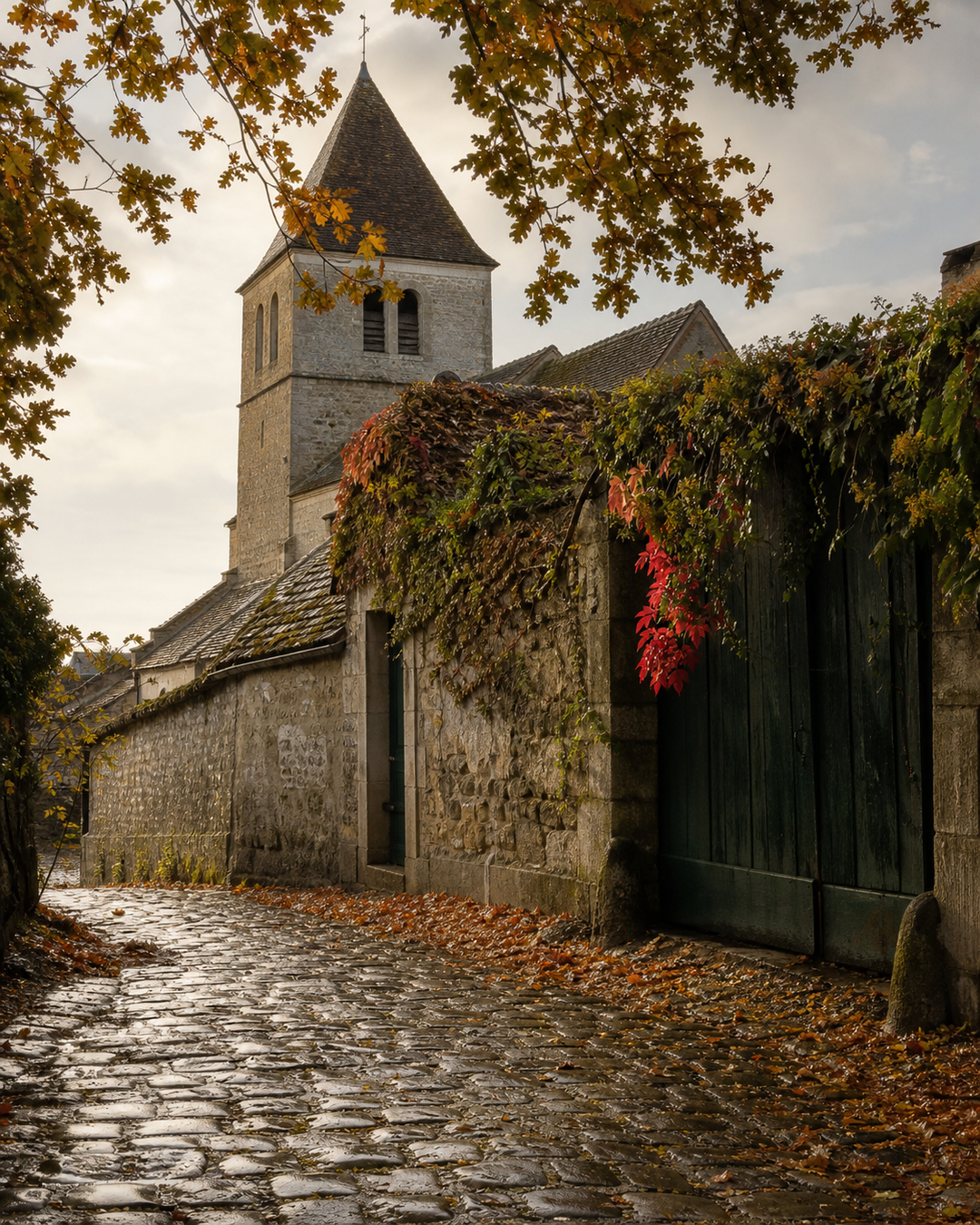
- The cool gloss of cobbles after a shower and the way ochre leaves settle into their seams.
- Narrow garden gates, sometimes ivy‑framed, that read like paragraph breaks between streets.
- The painted band in Saint‑Sévère’s nave: once heraldic, now atmosphere.
- The museum’s gathering of village artists’ work—names you can carry back into the streets.
- Forest air in your scarf; quiet roofs; a feeling that time is busier elsewhere.
At‑home practice: painter’s‑weather walk
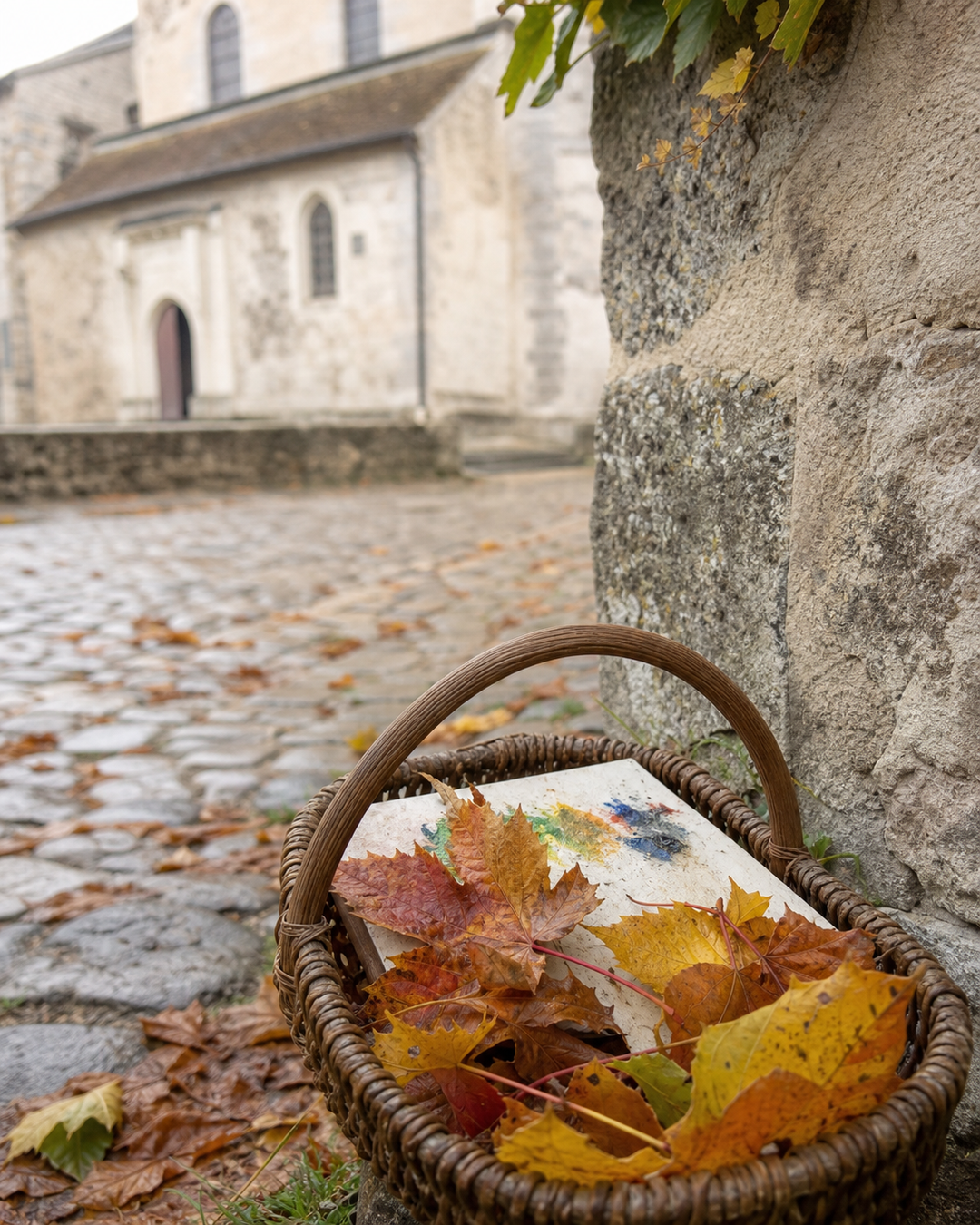
Choose one ordinary lane or park edge close to home. Visit it twice the same day—perhaps morning grey, then late‑afternoon gold. Make a tiny palette of five colours you noticed in bark, wet leaf, stone, sky or brick. Pair it with a simple goûter: apple slices, a heel of bread and hot tea.
Journal prompts
- What landscape near you becomes more interesting when you return to it in different weather?
- If you had to describe an entire place using only five colours, which would you keep—and why?
Sources for this article
- Fontainebleau Tourisme — Bourron‑Marlotte: https://www.fontainebleau-tourisme.com/en/bourron-marlotte-2/
- Fontainebleau Tourisme — The Artists Trail: https://www.fontainebleau-tourisme.com/en/discover-the-region/patrimoine-2/the-artists-trail/
- Bonjour RATP — Bourron‑Marlotte–Grez station: https://www.bonjour-ratp.fr/en/gares/bourron-marlotte-grez/