france beyond paris
Apple Cider Pilgrimage: Orchard Strolls and Warm Cider
For France‑loving travelers: plan a calm day on Normandy’s Cider Route—Beuvron‑en‑Auge to Cambremer—plus an at‑home warm‑cider ritual and journal prompts.
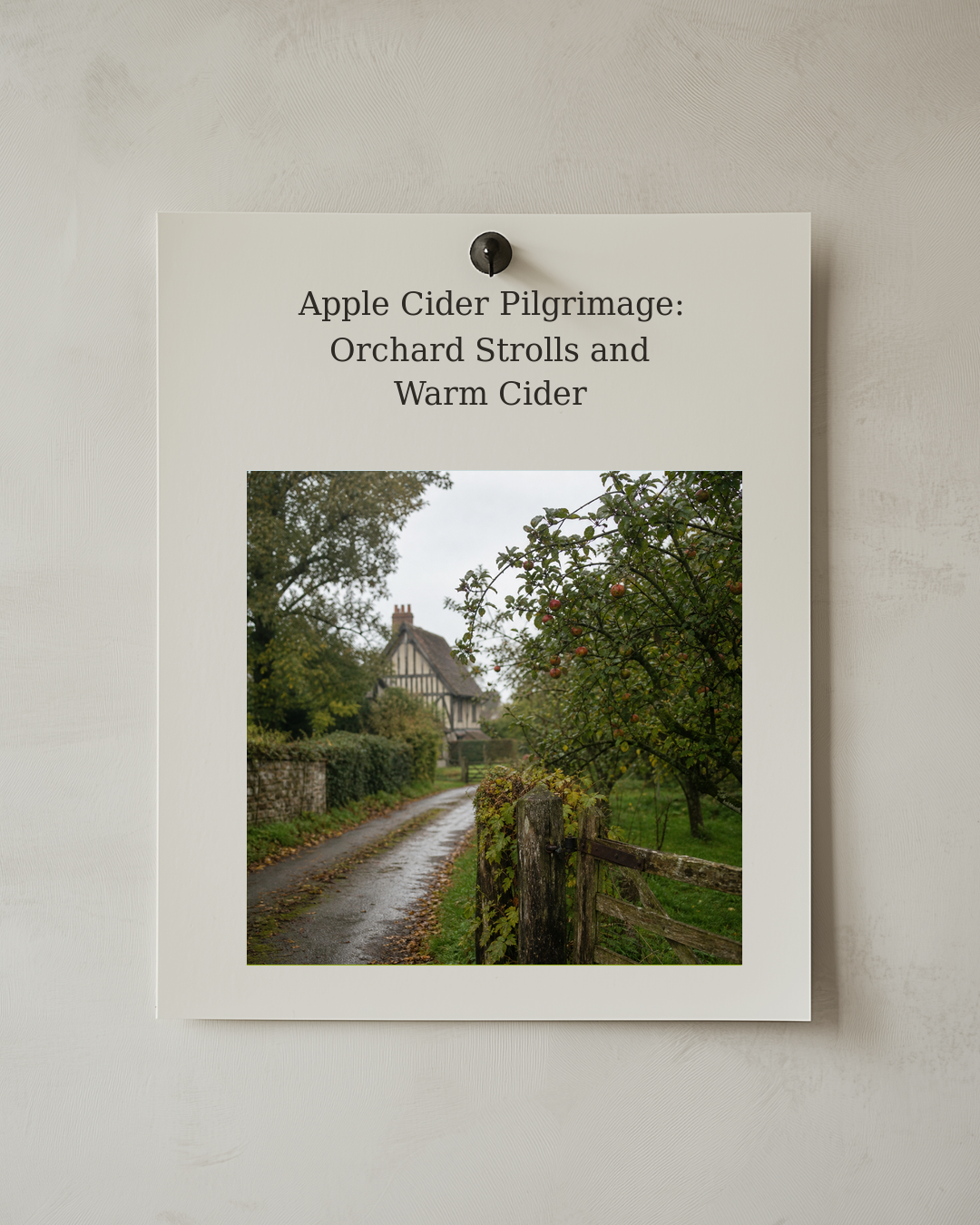
An apple-scented hush, a lane curling between hedges, a flicker of half‑timbered gables. In the Pays d’Auge, the Cider Route feels like a handwritten invitation: follow the orchards, taste the weather, and let the afternoon loosen into amber.
Why here: the Cider Route, east of Caen
To the east of Caen, a signposted, roughly 25‑mile loop links Beuvron‑en‑Auge, Cambremer, Bonnebosq and Beaufour‑Druval. More than twenty cider farms open along the way, with distilleries and producers marked by Cru de Cambremer signs.
The road slips through postcard countryside—apple orchards, châteaux and manor houses, timber‑framed cottages, and prestigious stud farms tucked behind white fences and long drives. It’s made for unhurried pauses and the soft click of a camera.
How the apple becomes an afternoon
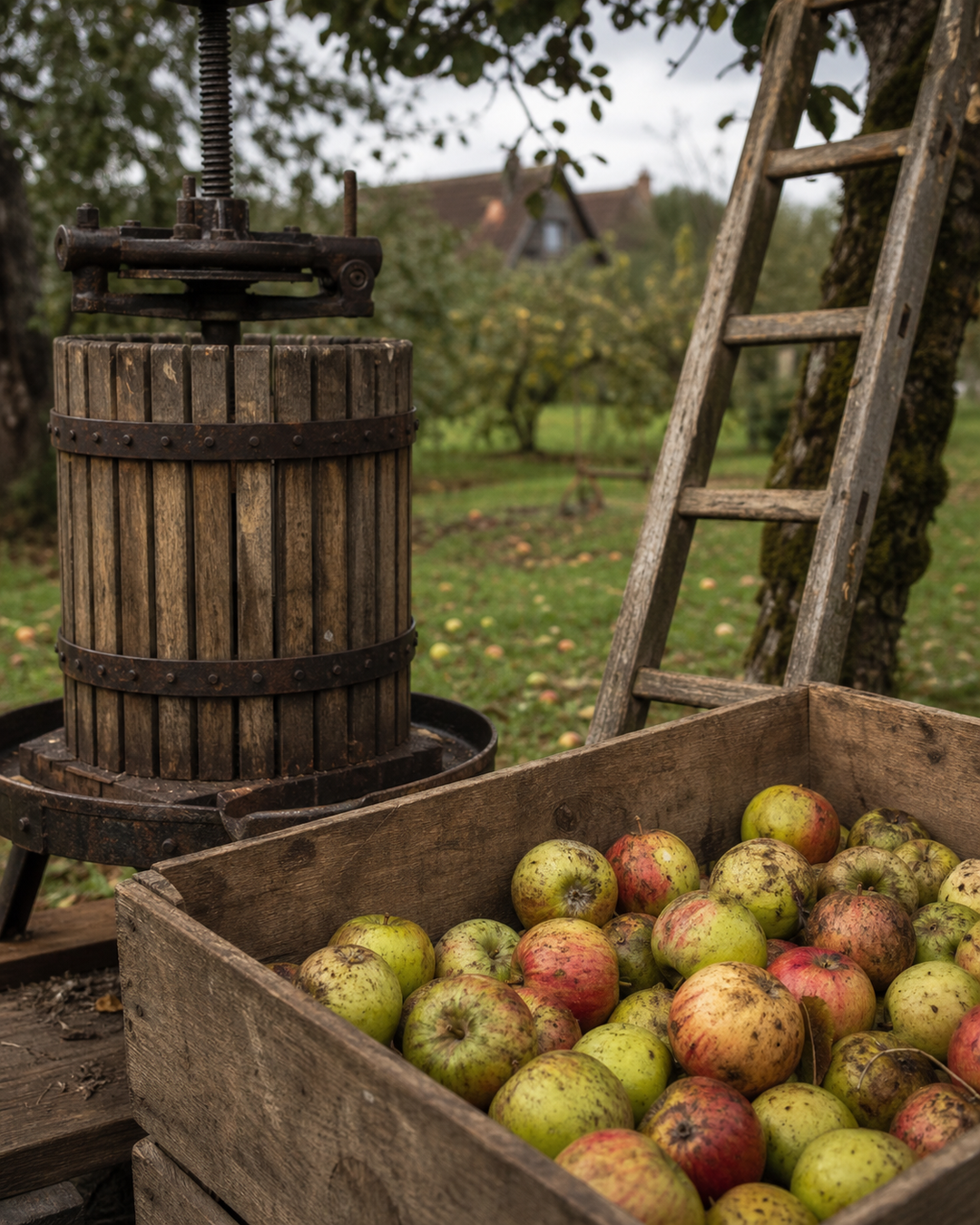
Cider begins as pure apple juice from varieties grown for character rather than snacking—names as pretty as la bouteille, le domaine, le tranquille, le bedan, le rouge‑mulot and la petite sorte. Left to ferment, the juice clears and clouds as it matures, each farm choosing its own blend.
Calvados starts as patiently settled cider, distilled in two stages, then aged in oak where it gathers tannins and deepens. Bottled, it no longer ages—so the time in cask is the story in your glass. Pommeau marries apple juice and calvados, rests in oak, and turns a mellow amber often served chilled.
A gentle day plan on the Route du Cidre
Choose one village to wander, one green interlude, and one producer to visit. You’ll taste more deeply by tasting less.
1) Beuvron‑en‑Auge: timber and time
Begin in Beuvron‑en‑Auge, labelled one of the “Plus Beaux Villages de France” and a “Village de caractère du Calvados.” Step into the intimate lanes toward Place Vermughen, enclosed by Augeron houses from the 16th to 18th centuries. Nearby are a 15th‑century manor, a covered hall, and a 17th‑century church; the former school now hosts métiers d’art spaces. Notice the carpentry grammar—angle, peg, rhythm—like a quiet metronome for the day.
2) Cambremer: gardens between sips
Continue to Cambremer, a keystone of the loop. For a soft pause between tastings, wander Les Jardins du Pays d’Auge—about 4 hectares of paths threaded past ponds, rare trees, lush plantings, and charming timbered buildings. It’s a serene counterpoint to the road’s temptations and a chance to reset your palate in green.
3) An orchard stop: learning in the glass
Pick one producer and linger. Around Cambremer and Beuvron‑en‑Auge you’ll find long‑established names, including Domaine Dupont, Calvados Pierre Huet, the Manoir de Grandouet, and the Cave d’Alain Sauvage. Tastes range from softly fruity ciders to structured, oak‑layered calvados and chilled, amber pommeau. Ask simple questions, listen for the year’s weather, and sip slowly.
What to notice on the road
- The Cru de Cambremer signs: your friendly breadcrumb trail.
- Hedgerow shifts—from hawthorn to apple to pasture—marking micro‑landscapes.
- Timber‑framed cottages with thatch or tile and deep eaves: light and shadow making lace.
- Behind white fences: a glimpse of Normandy’s horse‑breeding heritage.
Practical notes for a smooth loop
- Route markers: Follow the signposted Cider Route; it’s designed for leisurely driving and frequent stops.
- Before you go: Check a producer’s own page for current visiting conditions and tastings; family places may adjust with season and harvest.
- Pace yourself: Choose one village, one garden, one producer. Pack water and a small notebook for tasting impressions.
- Driving: Keep the day unhurried. If you’re tasting, share pours or designate a driver.
Tasting, simply
- Cider: naturally fermented, typically easy on the palate, with the Pays d’Auge’s pleasing, slightly bitter edge.
- Calvados: distilled from cider, then aged in oak for depth and structure; the years in cask do the shaping.
- Pommeau: apple juice blended with calvados and rested in oak until it turns smooth and amber—lovely chilled.
At‑home practice: a warm evening cider bowl
Warm plain apple cider or good apple juice gently with a slice of orange, a shard of cinnamon and one star anise—let it steam, not boil. Ladle into a bowl, wrap your hands around it, and take three slow breaths before the first sip. If you like, pair with a heel of bread and a thin slice of sharp cheese for balance.
Journal prompts
1) Describe the exact moment your glass met your nose today—three scents, one memory.
2) Which detail from the road (a fence, a timber joint, a tree line) would you sketch into a keepsake map, and why?
---
Sources for this article
- https://en.normandie-tourisme.fr/the-cider-route/
- https://routeducidre.com/
- https://www.beuvron-en-auge.fr/
- https://www.lesjardinsdupaysdauge.com/